


Struggles with injuries and lack of money: the double punishment for tennis players far from the Top 100 stars
A tennis player's income depends solely on his sporting results. In the event of injury, the daily life of those far from the Top 100 can become extremely complicated.
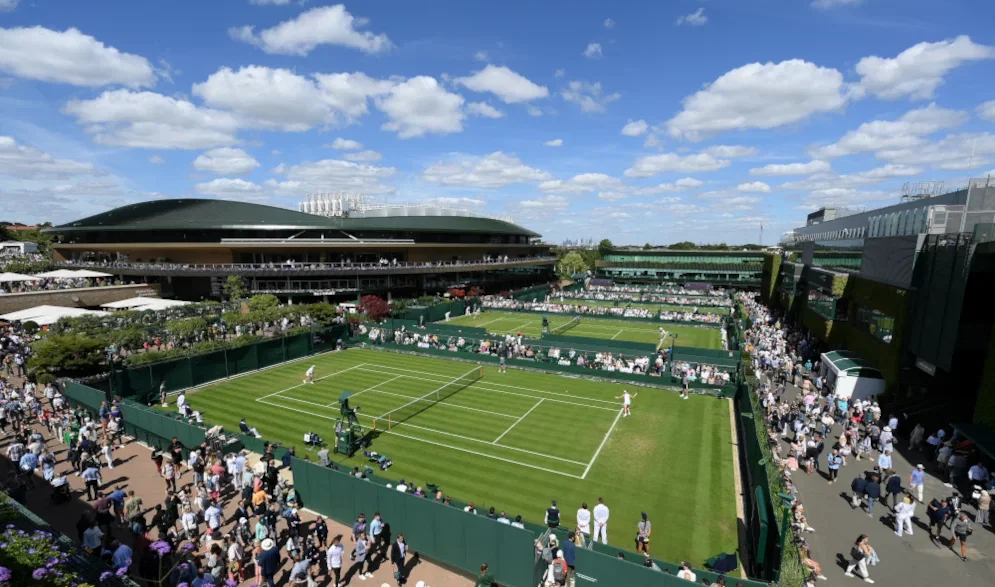


Struggles with injuries and lack of money: the double punishment for tennis players far from the Top 100 stars
Like any self-employed worker, a tennis player can only count on himself to hope to earn an income. Unlike an athlete in a team sport, a tennis player does not receive a fixed monthly salary and therefore enjoys far less financial security.
In the event of an injury, on top of halting sporting progress and dealing with recovery, a major financial problem arises. While this does not necessarily have a big impact on a Top 50 player, who can still rely on sponsors and some financial reserves, the consequences are completely different for players outside the Top 100.
Beyond the financial impact, an injury can seriously affect a player’s morale. This is especially true for a player with no guaranteed income, who may begin to question his career and the risks he has taken.
THE MULTIPLE PROBLEMS CAUSED BY AN INJURY
How do you keep busy when you’re injured? How do you stay in shape to make your comeback easier once healed? Will the body recover 100%? How do you manage financially with no prospect of income for the next six months?
So many questions a player may ask himself, particularly on the financial side if he is ranked outside the Top 100, and even more so if he is outside the Top 200. Since he does not play in the main draws of the Grand Slams (which are the most lucrative tournaments), the very high cost of financing a season is a major issue for him.
To address this problem, the ATP launched the “Baseline” program at the end of 2023. Its aim is to guarantee a minimum income to players ranked in the Top 250 in order to provide them with some budgetary security. In case of injury, they will be financially protected. As the newspaper L’Équipe explained when this program was launched, a player taking part in fewer than 9 ATP or Challenger tournaments during a season due to injury would receive $200,000 if he is a Top 100 member, $100,000 if ranked between 101st and 175th, and $50,000 if ranked between 176th and 250th.
But players are increasingly lamenting the rise in injuries on the professional tour, blaming playing conditions that are ever more demanding on their bodies and too physically taxing. Ball speed as well as court speed are the main factors mentioned. The overall slowing of the game in recent years has increased the physical demands and created an ever greater physical challenge.
FIGHTING INJURIES AND FRUSTRATION: THE EXAMPLE OF JOHN MILLMAN

To be able to play and make a living from their passion, sacrifices are necessary, and many players are willing to make them. Unfortunately, these sacrifices can have consequences from which some have not been spared.
In an interview with ABC, former world No. 33 John Millman revealed that he had questioned his future in tennis in 2014 after shoulder surgery that kept him off the courts for 11 months.
Yet he had been on the brink of the Top 100 in 2013, and this injury shattered his short-term hopes. He said: “With these injuries, you have to start all over again. It’s tough. It’s tough financially. It’s tough physically. It’s tough mentally. But you do it. And you go through all those trials in rehab, you do all that for something like this (the Top 100, which he managed to reach when he came back). Everything becomes a little more rewarding.” Financially, the Australian worked in an office during his injury, like an ordinary person, a “9 to 5,” as he called it.
“In my head, the goal was the Top 100. That number made me happy”
In an interview with the ATP in 2019, Millman summed up the injuries he had dealt with in his career: “I’ve had two shoulder surgeries and another one on my groin. My journey has been pretty chaotic. My first surgery was on my shoulder at 18. Despite that, I still had that hunger to win and that desire to compete.
My next injury was a defining moment in my career. I felt like I’d reached a good ranking, I believe I was around 130 in the world, and I really thought I was ready to make a breakthrough.
In my head, the goal was the Top 100. That number made me happy. Being so close to the goal, then having that major shoulder surgery, which forces you to start all over again from scratch. When I came back, I played a swing in the United States (in September 2014), I managed to get some good results and regain confidence in my body, which started my resurgence. In less than a year, I went from almost nothing to the Top 100.”
Putting injuries into perspective as a way to build mental resilience
Faced with the difficulty of his injuries, Millman chose to put things in perspective and focus on the positives: “It wasn’t easy, but, you know, a lot of people in everyday life go through much more complicated problems than mine. It’s very important to have people around you to support you at those times. Looking back, it was all worth it.”
This resilience allowed him to reach No. 33 in 2018, the best ranking of his career, thanks in particular to a quarterfinal at the US Open that year, after a prestigious win over Roger Federer. Despite a career heavily disrupted by injuries, Millman managed to get the most out of his body, even though he was forced to retire at the 2024 Australian Open after pushing his body to its limits.
A passion for tennis and a thirst for victory can be an extremely powerful source of motivation, even if it sometimes means putting your health second. Players devote themselves to this sport from a very young age, which can make failure even harder to accept.
INJURY, DOUBT AND REBIRTH: THE GRADUAL COMEBACK OF RYAN PENISTON
Injuries can happen at any time during the season. They can break positive momentum and then sow doubt in a player’s mind. After recovery, you never really know if you will regain your previous level.
Ryan Peniston, currently ranked No. 194 in the world, told the Lawn Tennis Association, the British tennis federation, about his ankle injury suffered in February 2024 in Manama (he was No. 204 at the time), which kept him off the tennis courts for three months.
“I wanted to play again, it was a tough time”
“I had two torn ligaments in my ankle, so surgery was necessary. Obviously, I wanted to play again, to be on the tennis court all the time, it was a tough time. First there was the surgery, then two weeks of recovery. After that, I had to take it step by step: putting weight on my leg, regaining range of motion, then gradually coming back onto the court.

The doctor was realistic, he told me it would take 12 weeks. I looked at the schedule and I think the 13th week was Roland Garros qualifying. So my coach and I said: ‘Let’s aim for that, why not!’. I went to the gym for a week after doing nothing for two weeks. Starting to move again, working a bit, is really good for the body. The aim was to regain muscle, because I had lost some from sitting around doing nothing.”
The difficulty of getting back to your pre-injury level
At that point, Peniston achieved his goal: the Briton played Roland Garros qualifying, where he unfortunately lost in the first round. He then played the grass-court tournaments in Great Britain in June, a part of the year he really enjoys, but managed just one win in five matches. Worse, he had to wait until August before he finally managed to win back-to-back matches.
It was not until November that Peniston truly got back to winning ways: a title at the Heraklion Futures, followed by another tournament win at the same level in Monastir. While an injury may only keep a player away from the courts for a limited amount of time, in reality it takes much longer to recover a level of play similar to that before the injury.
Moreover, during their layoff, players drop down the rankings as they do not compete in any tournaments. In 2024, Peniston slipped as low as No. 596 in the world.
The safety net of the protected ranking
Fortunately, players who are out for at least six months due to injury do have some protection. Thanks to the protected ranking system, on their return they can enter tournaments using a ranking calculated on the average of their ranking over the first three months following the injury. This allows them to return to competition at the same level they previously played. However, the conditions for activating this protected ranking are strict and its effects limited.
To be eligible, a player must be out injured for at least six months. The protected ranking can then only be used for nine tournaments spread over a maximum period of nine months from the first tournament played with it.
DONALDSON, OR WHEN INJURIES FORCE A PRODIGY TO GIVE UP EVERYTHING

Sadly, there are injuries from which some never recover. Jared Donaldson, world No. 48 at age 22 in 2018, had a promising career ahead of him. The American took part in the 2017 Next Gen ATP Finals, alongside Alexander Zverev, Daniil Medvedev, Andrey Rublev and Karen Khachanov, among others.
But two knee surgeries in 2019 and 2020 ended the hopes placed in him: Donaldson played his last professional match in Miami in 2019 and would never return. The 2017 Cincinnati quarterfinalist enrolled at university in 2021 and left professional tennis behind.
“I was no longer physically capable of it”
In the documentary “Behind the Racquet,” made by former player Noah Rubin, he spoke about his injury: “I was in constant pain for nearly three years. I was so desperate to find another path that could be fulfilling that the option of retiring and going back to school was almost a relief. It wasn’t hard in the sense that I always felt like I didn’t have a choice. It wasn’t like I had to end my career because of a lack of skill or desire.
It’s just that I was no longer physically capable of it.
What really struck me was when I got to college and had to ask for help. I’d always been very good. Having to ask for help was a strange feeling. That was the hardest part of the transition, but I never really found it sad. Life doesn’t always go the way you want, and you have to adapt.
“Leaving pro tennis: a real relief”
Honestly, it was a relief to step away from tennis. I remember, just before my second surgery, I was on the phone with someone who basically told me that if it didn’t work out, I needed to stop and go back to school. That conversation was a relief, because I was already starting to think about rehab and everything that would involve.
I find it really hard to imagine my old life. It’s certainly not my first choice to be 27 and starting my final year of college. However, I’ll always be infinitely grateful to the University of Pennsylvania. I love studying. In tennis, I just wanted to get a little bit better every day.
I think that in life, professionally, you just need to want to keep learning more. I didn’t love tennis. I loved competing and chasing something really difficult. That’s what I miss. That’s what I took from tennis and that’s what I really love.” he said, in comments reported by Tennis World USA in 2024.
BETWEEN FRAGILE DREAMS AND INVISIBLE STRUGGLES
From Millman to Donaldson, via Peniston, each journey of a professional tennis player is unique and shows that everything can change overnight, in a positive or negative way. The precarious situation of players competing at a lower level remains a major problem for the governing bodies of professional tennis.
Injuries, often seen as simple twists of fate in sport, take on a whole new dimension in professional tennis. They are not limited to a temporary break from competition: they undermine psychological balance, slow sporting ambitions and, above all, expose the precariousness of a system where individual success conditions all financial stability.
Caught between passion and sacrifice, tennis remains an extremely demanding sport, where the slightest injury can call everything into question, but can also reveal the inner strength of those who refuse to give up.
While initiatives such as the ATP’s Baseline program represent significant progress toward greater security for players, they cannot erase the daily reality of hundreds of players who, far from the spotlight, are fighting to come back, to play again and simply to keep believing in their dream.


